

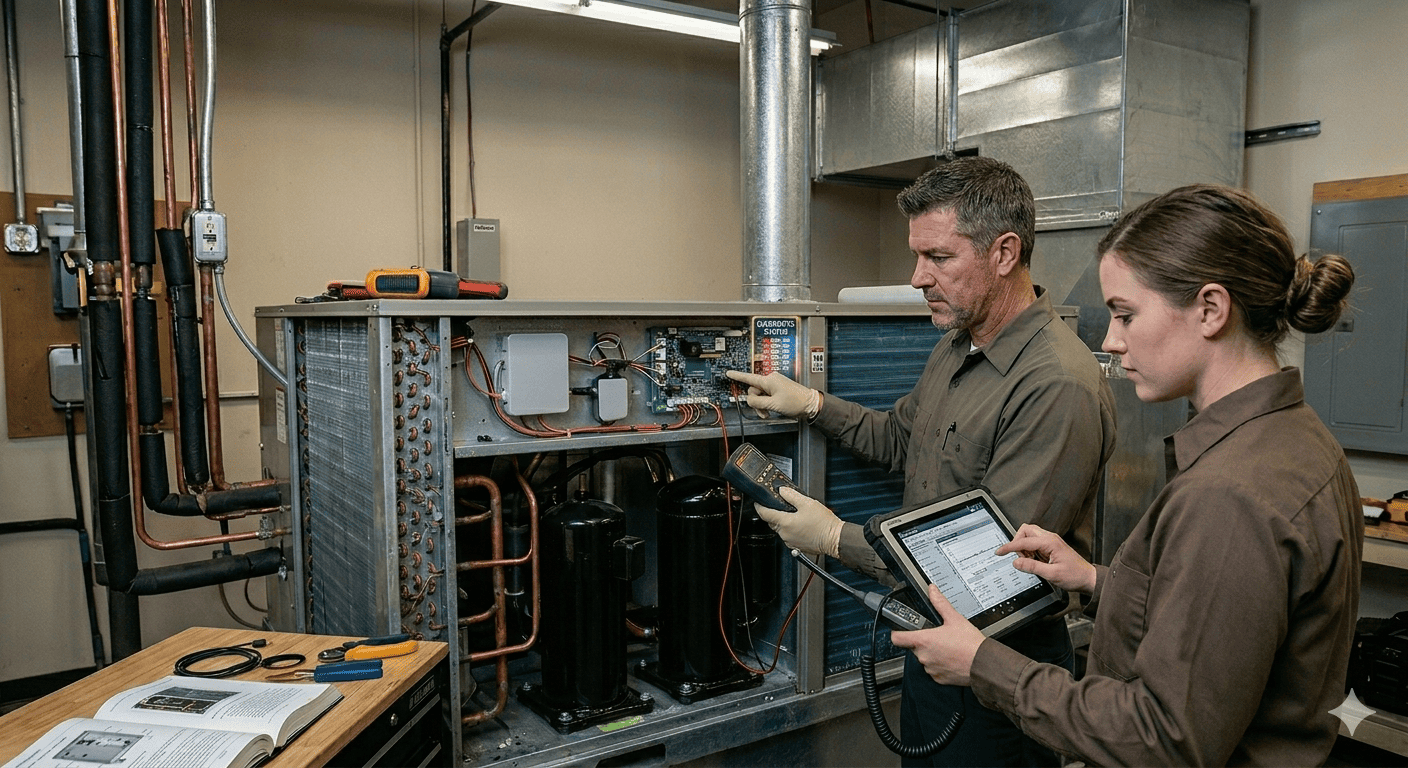
Commercial HVAC systems across California are undergoing one of the most important regulatory shifts in decades. Updated refrigerant rules are changing how systems are serviced, repaired, and replaced, forcing many business owners to rethink long-term maintenance and upgrade strategies.
For facility managers, restaurant operators, agricultural facilities, and commercial property owners, these changes are more than technical updates. They directly impact operating costs, system lifespan, and capital planning. Providers like Commercial Service Company are seeing increased demand for help navigating these evolving requirements and understanding how they affect day-to-day HVAC operations.
Why Refrigerant Regulations Are Being Updated
The refrigerant transition is driven by environmental policy focused on reducing hydrofluorocarbons (HFCs), which contribute significantly to global warming. Under federal initiatives like the AIM Act, along with California’s environmental standards, high-global-warming-potential refrigerants are being phased down and replaced with lower-impact alternatives.
This shift is directly affecting widely used refrigerants such as R-410A, which has been standard in many commercial HVAC repair and installation systems for years. New equipment is now transitioning toward refrigerants like R-454B and R-32, which require updated system designs and safety considerations.
For many businesses, this means older systems are becoming more expensive to maintain and harder to service as availability decreases and regulations tighten.
How This Impacts Commercial HVAC Repair Services
One of the most noticeable effects of these changes is in commercial HVAC repair services. As refrigerants are phased out, supply becomes more limited, and costs increase.
Technicians at Commercial Service Company are increasingly encountering situations such as:
- Refrigerant leaks that are more expensive to recharge due to limited availability
- Older systems requiring retrofits that may not be cost-effective
- Difficulty sourcing replacement parts for legacy HVAC systems
In many cases, continuing to repair older equipment using phased-out refrigerants is no longer the most efficient long-term strategy, especially when compliance requirements are considered.
Compatibility Issues With New Refrigerants
A major challenge in commercial HVAC system upgrades is that refrigerants are not universally interchangeable. Systems built for R-410A, for example, are not automatically compatible with newer A2L refrigerants without modifications or full system replacement.
This creates complications for businesses trying to extend the life of existing equipment. Key components such as compressors, evaporator coils, and safety systems may not meet the requirements for newer refrigerants.
As a result, many property owners are now planning earlier transitions to updated systems rather than continuing with costly repairs.
Increasing Costs of Maintaining Older HVAC Systems
As regulations tighten, the cost of maintaining outdated systems continues to rise. It’s not just refrigerant pricing—labor, parts availability, and system inefficiency all contribute to higher operating expenses.
In many commercial environments where HVAC systems run continuously, this leads to:
- More frequent breakdowns requiring emergency commercial HVAC service
- Longer downtime during repairs
- Higher monthly energy usage
- Reduced overall system performance
Commercial Service Company often advises clients that investing heavily in aging systems may not provide the best long-term return compared to upgrading to compliant, energy-efficient equipment.
The Rise of A2L Refrigerants and New System Requirements
A major part of the HVAC transition involves A2L refrigerants such as R-454B. These refrigerants are designed to reduce environmental impact while maintaining strong cooling performance.
However, they also introduce new requirements. Because A2Ls are mildly flammable, updated safety standards must be followed, including system design changes and installation requirements.
This has led to evolving standards in commercial HVAC installation and design, including:
- Updated ventilation requirements
- Leak detection system integration
- Revised equipment placement guidelines
For commercial facilities, HVAC upgrades now often involve more than simple equipment replacement—they require full system planning and compliance review.
When HVAC Repair Is No Longer the Best Option
One of the most important decisions businesses face is whether to pursue commercial HVAC repair or invest in a full system replacement.
Repair may still be practical when:
- The system is relatively new and fully compliant
- Only minor components require service
- Refrigerant is still widely available
However, replacement is often recommended when:
- The system relies on phased-out refrigerants
- Frequent refrigerant recharges are needed
- Energy efficiency is significantly below modern standards
- Major components are nearing end-of-life
Commercial Service Company frequently helps businesses evaluate this decision based on system condition, compliance requirements, and long-term operating costs.
Planning for Efficiency and Long-Term Compliance
While these regulatory changes create challenges, they also present opportunities. Modern HVAC systems are significantly more efficient and are designed to reduce long-term operational costs.
Upgrading to compliant equipment can provide benefits such as:
- Lower energy bills through improved efficiency
- Fewer emergency repair calls
- More stable indoor temperature control
- Better compliance with environmental regulations
- Extended system lifespan with modern components
Planning ahead is especially important as demand for compliant equipment continues to rise, which can impact project timelines and availability for commercial HVAC system replacement.
Why Professional HVAC Guidance Is More Important Than Ever
With refrigerant laws evolving and equipment technology changing rapidly, HVAC decisions are becoming more complex. Choosing the wrong repair approach or delaying upgrades can lead to higher long-term costs and unexpected downtime.
Experienced technicians at Commercial Service Company help businesses evaluate system condition, refrigerant compatibility, and long-term efficiency goals. This allows property owners to make informed decisions rather than reacting to emergencies.
From commercial HVAC maintenance services to full system replacements, understanding regulatory changes is now a critical part of facility management.
Stay Ahead of HVAC Changes with Trusted Commercial Support
As refrigerant regulations continue to evolve, commercial HVAC systems must adapt to remain efficient, compliant, and reliable. The shift toward lower-GWP refrigerants is reshaping how systems are designed, repaired, and replaced—but it also offers a chance to improve long-term performance and reduce operating costs.
Working with a trusted provider like Commercial Service Company helps ensure your system stays compliant while minimizing downtime and unexpected expenses. Their experience in commercial HVAC repair, installation, and maintenance services makes them a valuable partner for businesses navigating these changes.
If your facility relies on consistent climate control, now is the time to evaluate your system’s readiness for upcoming regulatory requirements and long-term efficiency goals.

