

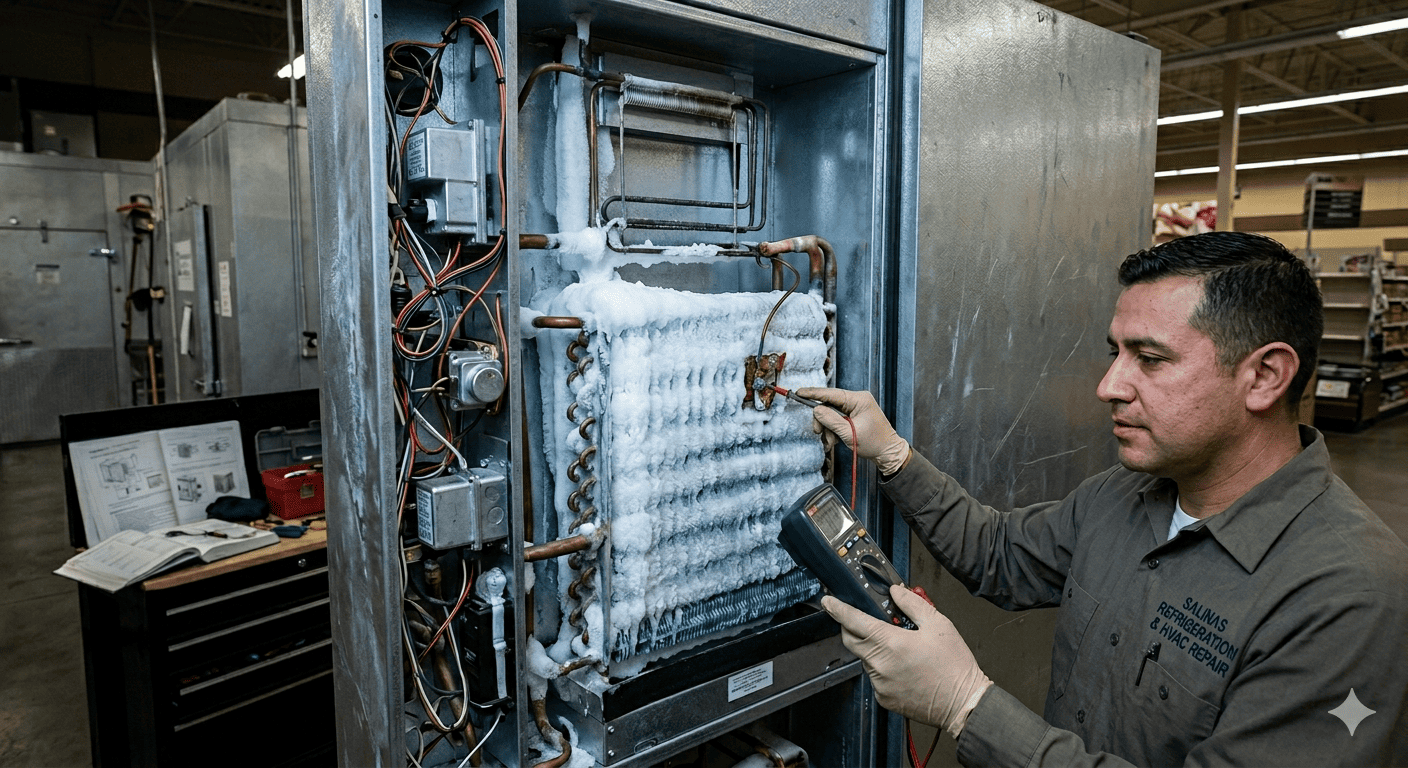
In any commercial refrigeration setup, the defrost cycle plays a critical role in keeping equipment operating efficiently. It prevents ice from building up on evaporator coils, maintains proper airflow, and helps ensure consistent temperature control. When that cycle fails, however, systems can quickly become inefficient or even unusable.
For businesses that rely on reliable cold storage, understanding what causes these failures is key to avoiding downtime and protecting inventory. A trusted food service equipment provider like Commercial Service Company often sees these issues develop gradually—starting small before turning into major system problems.
Defrost Timers and Control Board Malfunctions
At the center of every defrost cycle is a timer or electronic control board that determines when defrosting begins and ends. If this component starts to fail, the entire system can fall out of sync.
A faulty timer may stop initiating defrost cycles altogether, while a malfunctioning control board may send incorrect signals. In both cases, ice begins to accumulate on evaporator coils, restricting airflow and forcing the system to work harder than intended.
Technicians from Commercial Service Company often find that what appears to be a cooling issue is actually a timing or control failure that has gone unnoticed for weeks.
Defrost Heater Failure
Once a defrost cycle starts, heaters are responsible for melting ice on the coils. If those heaters fail, the system may enter defrost mode but produce little to no actual heat.
This leads to continuous ice buildup, even though the system is technically running a defrost cycle. Over time, airflow becomes restricted, temperatures become unstable, and the compressor is forced to run longer cycles.
In many service calls handled by Commercial Service Company, heater failure is one of the most common and overlooked causes of defrost problems.
Sensor and Thermostat Issues
Defrost termination sensors are designed to signal when the evaporator has reached the correct temperature and the cycle should end. When these sensors malfunction, the system loses accurate feedback.
If a sensor ends the cycle too early, ice remains on the coils. If it fails to respond, the system may stay in defrost mode too long, leading to temperature fluctuations that can affect stored products.
Even minor calibration issues can gradually lead to major performance problems if not corrected.
Airflow Problems and Coil Blockage
One of the biggest contributors to defrost-related issues is restricted airflow. When evaporator coils become covered in ice, air cannot circulate properly through the system, reducing cooling efficiency.
This can be caused by dirty coils, blocked vents, or malfunctioning fans. In high-traffic commercial environments, frequent door openings can also introduce warm, moist air that accelerates frost buildup.
Commercial Service Company frequently finds that airflow restrictions are both a symptom and a cause of defrost cycle failures, creating a repeating cycle of inefficiency.
Drain Line Blockages
Even when a defrost cycle successfully melts ice, the water must drain away properly. If drain lines become clogged or partially frozen, water can refreeze inside the unit.
This creates a recurring issue where ice continues to return even after defrost cycles are functioning. Over time, this can lead to heavy buildup that impacts performance and stresses system components.
It’s a subtle problem that often goes unnoticed until the ice becomes visible or cooling performance drops significantly.
Refrigerant Imbalances
While not part of the defrost system itself, refrigerant levels play a major role in how quickly frost forms on evaporator coils. Low refrigerant or leaks can cause coils to run colder than normal, accelerating ice buildup.
When this happens, even a properly functioning defrost system may struggle to keep up. The result is frequent cycling, uneven cooling, and added strain on compressors.
Technicians at Commercial Service Company often inspect refrigerant levels when diagnosing repeated defrost cycle issues, as it’s a key factor in overall system balance.
Environmental and Usage Factors
Commercial refrigeration systems are often exposed to challenging conditions. High humidity, frequent door openings, and constant product turnover all contribute to increased moisture inside the unit.
This moisture freezes on evaporator coils and increases the demand on the defrost system. If any part of the cycle is weak or failing, ice buildup can escalate quickly.
Without proper maintenance, these environmental factors can turn minor inefficiencies into recurring system failures.
Why These Problems Should Be Addressed Quickly
Defrost cycle failures rarely remain isolated issues. If left unaddressed, they can lead to:
- Reduced cooling performance
- Increased energy consumption
- Compressor strain or failure
- Product spoilage
- Unexpected system downtime
What often begins as a small sensor or timer issue can escalate into a full system breakdown if not handled promptly by a qualified technician.
Reliable Commercial Refrigeration Support You Can Count On
When a refrigeration system starts showing signs of defrost cycle issues, quick action makes all the difference. Whether it’s ice buildup, inconsistent temperatures, or frequent cycling, these symptoms often point to deeper mechanical or electrical problems.
Commercial Service Company provides professional diagnostics and repair for commercial refrigeration systems, helping businesses restore performance and avoid costly downtime. From control board issues to heater failures and airflow problems, their team understands how to identify the root cause and fix it efficiently.
For businesses that depend on reliable refrigeration every day, having a dependable service partner is essential. When issues arise, Commercial Service Company is ready to help keep systems running smoothly.
If you’re experiencing ongoing refrigeration problems, especially with defrost cycles, reaching out early can prevent larger system failures. For support in Salinas, California, and nearby areas, Commercial Service Company remains a trusted resource for commercial refrigeration service and repair.

